Customer expectations around delivery have changed dramatically over the last few years. Fast shipping is no longer considered a premium service. In many industries, same-day and next-day delivery are simply expected.
For logistics teams, that shift has created a new set of operational challenges. While warehouses and transportation networks remain important, the real pressure often comes during the final stage of delivery: the last mile.
To solve that problem, modern logistics businesses are increasingly turning to mobile-first delivery platforms that give drivers everything they need in one place. More than just a delivery app, these platforms act as a real-time operational hub, helping businesses improve efficiency, visibility, and coordination across their fleets.
Faster Onboarding Without Compromising Security
In logistics, onboarding speed matters. High driver turnover and rapidly changing delivery volumes mean businesses need systems that can get delivery partners up and running quickly without sacrificing security or operational control.
An optimized onboarding flow streamlines the transition for new delivery partners. Secure login systems, real-time account validation, and clear error handling help drivers access their routes quickly and with minimal confusion.
The goal is simple: reduce the time spent dealing with administrative tasks so drivers can stay focused on deliveries. Small usability improvements at this stage can have a surprisingly large impact on daily operations, especially for growing fleets managing hundreds of active drivers.
Turning the Driver Dashboard Into an Operational Command Center
The driver dashboard has evolved far beyond a simple list of delivery stops. Today, it functions as a live operational workspace that gives drivers and dispatch teams instant visibility into performance and progress throughout the day.
One important feature is earnings transparency. When drivers can clearly see completed trips, projected earnings, and incentives in real time, it creates stronger engagement and motivation during delivery shifts.
Asset management also becomes more streamlined. Drivers can immediately verify assigned vehicles or delivery equipment before starting their routes, reducing dispatch errors and minimizing delays during busy rollout periods.
For instance, implementing a mandatory confirmation step before commencing a route prevents unintended activations and ensures the precision of route data for dispatch teams overseeing operations.
Smarter Order and Route Management
Efficient delivery operations depend on consistent, accurate order management from the first stop to the final drop-off.
Modern route planning systems help drivers prioritize stops intelligently while clearly distinguishing between prepaid orders and cash-on-delivery transactions. Having that information upfront allows drivers to prepare for collections in advance and avoid confusion during deliveries.
Geofencing has also become an important operational tool. Drivers can only confirm arrival once they are physically within the designated delivery area, helping businesses maintain accurate delivery records and prevent false status updates.
At the same time, real-time status tracking gives dispatchers and customers continuous visibility throughout the delivery process. Every update, whether it’s arrival, completion, delay, or failed delivery, feeds directly into the system and helps generate more accurate ETAs.
This level of visibility improves communication across the entire delivery chain while reducing customer uncertainty.
Simplifying Cash-on-Delivery Operations
For many logistics businesses, cash-on-delivery orders still represent a significant portion of daily transactions. Managing those payments efficiently can be difficult without the right tools in place.
Integrated payment workflows make the process much easier for drivers. They can quickly switch between cash and digital payment methods directly within the app, creating a smoother experience for both customers and delivery teams.
Delivery partners have the ability to track their total cash collections live and quickly submit documentation of bank deposits right after dropping off funds at approved locations.
Proof of delivery is equally important. Built-in camera functionality allows drivers to capture signatures, receipts, or package photos instantly while automatically attaching timestamps and delivery records. Efficient image compression ensures uploads remain fast without consuming excessive mobile data.
Handling Returns and Delivery Exceptions More Efficiently
No delivery operation runs perfectly every day. Failed deliveries, customer cancellations, and returns are unavoidable parts of logistics management.
What matters is how efficiently those situations are handled.
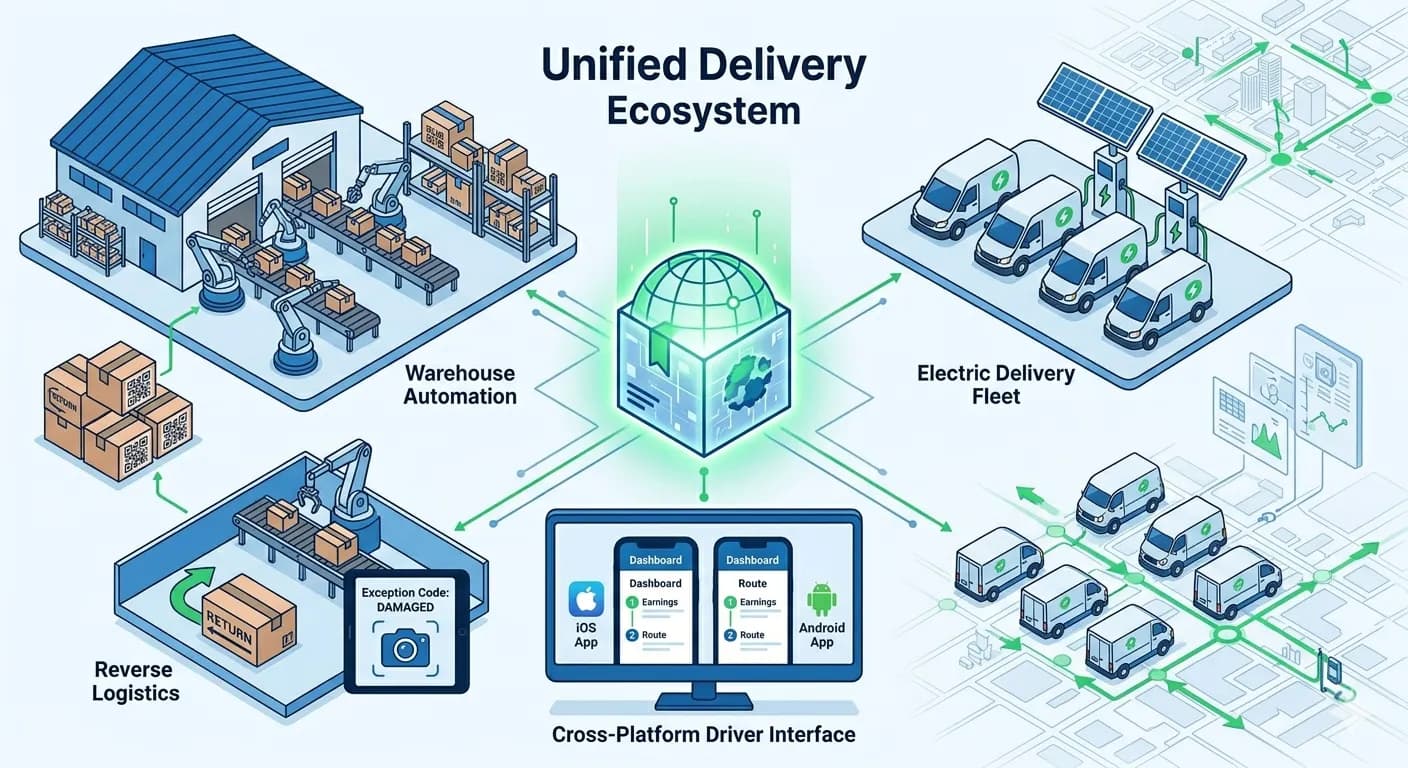
A strong reverse logistics workflow helps standardize the process. Drivers can select predefined reason codes for failed or cancelled deliveries, making reporting more accurate and helping operations teams identify recurring issues over time.
Photo verification adds another layer of accountability. If products are damaged or refused, drivers can document the condition immediately and record returned quantities on-site. That information syncs directly with inventory and warehouse systems, reducing delays and improving inventory accuracy.
Building a More Efficient Delivery Operation
Modern route planning platforms are no longer just navigation tools for drivers. They have become central operational systems that connect dispatch teams, delivery partners, payments, customer communication, and performance tracking into one unified workflow.
For businesses, the benefits are substantial. Better route optimization helps reduce fuel costs and delivery times. Digital workflows eliminate unnecessary paperwork. Real-time visibility improves decision-making and customer communication.
Most importantly, these systems help logistics companies deliver a more reliable customer experience at scale.
As delivery expectations continue to rise, businesses that invest in smarter, more connected logistics technology will be in a much stronger position to operate efficiently, scale sustainably, and maintain customer trust over the long term.
The platform’s availability across both iOS and Android also ensures flexibility for fleets operating across different devices and regions.
Looking for the bigger picture on routing? If you want to understand the core differences between simple routing and full fleet optimization, read our companion piece: Mastering Modern Logistics with Intelligent Delivery Systems.
OgaBusinessSolutions
Logistics Operations Specialists
Delivering cutting-edge logistics platforms, intelligent vehicle dispatch engines, and optimization strategies to fuel the future of distribution networks globally.